 Gunjan Kumari
|
November 19, 2026
|
4 Min Read
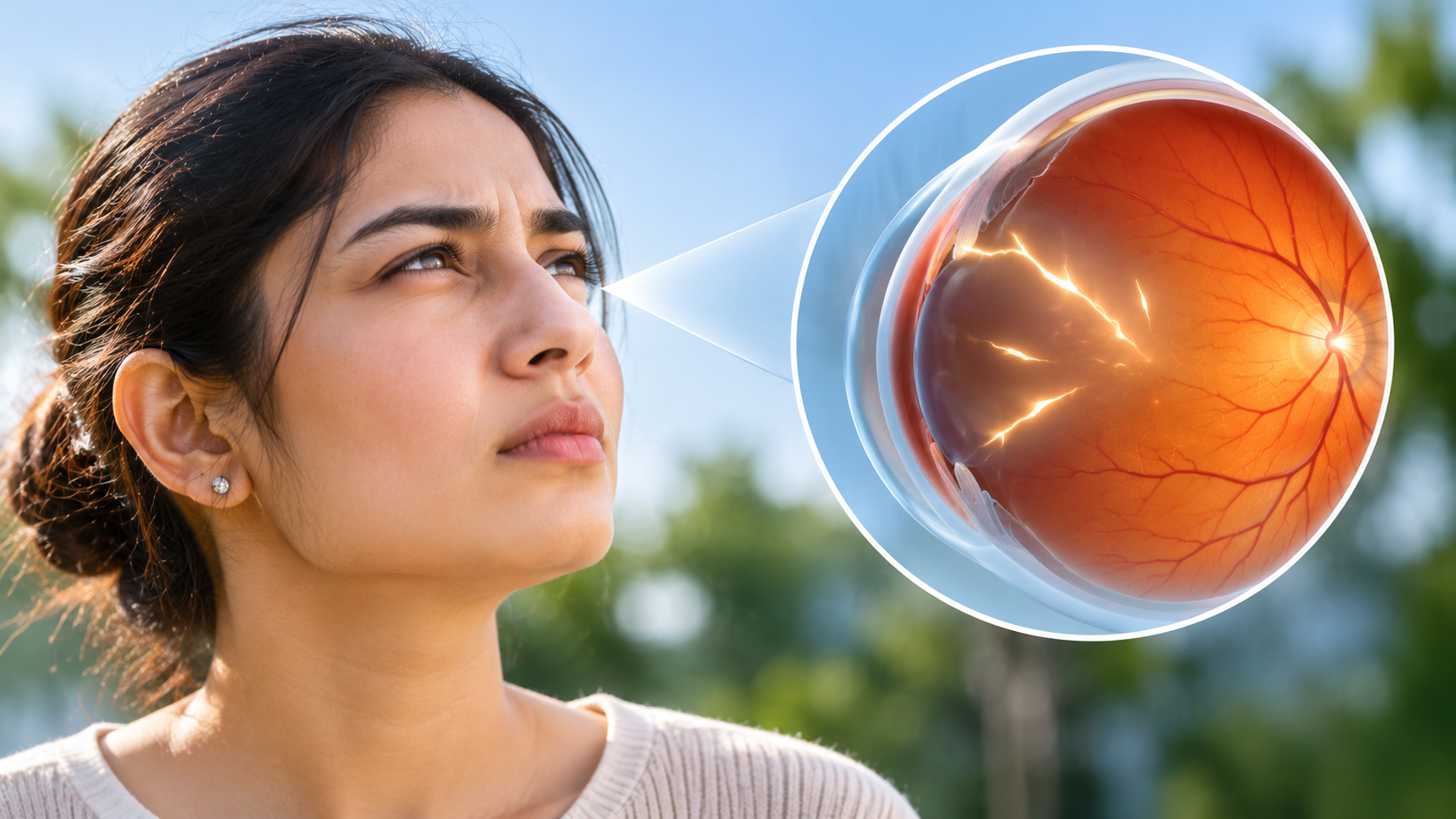
flashes of light in vision can appear as brief streaks, flickers or lightning-like flashes, even when no external light source is present. While they may occur due to age-related changes inside the eye, they can also indicate traction on the retina or a retinal tear. Understanding their causes, warning signs and when to seek urgent eye care can help protect your eyesight.
Flashes of light in vision often occur when the vitreous, a gel-like substance inside the eye, changes with age and pulls on the retina. This stimulation can create brief sensations of light, particularly in the peripheral vision.
Common causes include:
Occasional flashes may occur due to vitreous changes, but sudden flashes of light should be taken seriously, particularly when accompanied by:
These symptoms may indicate a retinal tear or retinal detachment, which can lead to permanent vision loss without prompt treatment. Do not wait for symptoms to improve on their own.
An ophthalmologist performs a dilated eye examination to check the retina for tears, bleeding, or signs of detachment. Eye drops widen the pupils, allowing a better view of the retina. Additional imaging or ultrasound may be recommended if needed.
Flashes caused by uncomplicated vitreous changes may gradually become less noticeable. Migraine-related visual disturbances also typically resolve. However, flashes caused by a retinal tear or detachment will not be safely managed by waiting. Treatment depends on the underlying cause and may involve laser procedures or surgery.
Flashes can occur even with your eyes closed because they may originate from stimulation of the retina inside your eye rather than an external light source.
Stress may trigger migraine episodes, which can cause flickering lights or zigzag patterns. However, new flashes should not automatically be attributed to stress without eye examination.
Flashes affecting one eye, particularly if new or recurring, may be associated with vitreous changes or retinal problems. A sudden onset requires prompt evaluation.
Yes. Retinal tears and detachments are often painless. Flashes, floaters or shadows in vision may be the first warning signs.
Seek immediate eye care if flashes suddenly appear, increase in frequency, or occur alongside new floaters, blurred vision or a curtain-like shadow. These may indicate a retinal tear or detachment requiring urgent treatment.
Table of Contents
ToggleGet in touch with us today for expert eye care and personalized solutions. We’re here to help!
We’re here to provide reliable healthcare information and services. Let’s build a healthier future together.