 Gunjan Kumari
|
November 10, 2026
|
7 Min Read
Diabetes can affect the health of the retina over time, making diabetic eye screening an important part of diabetes management. But does every person with diabetes need an annual retina screening? The recommended frequency can vary depending on the type of diabetes, previous examination results and individual risk factors. In this blog, we explain when screening should begin, how often it is recommended, who may need more frequent check-ups, and when the interval between examinations can be extended.
Annual retina screening is commonly recommended for people with diabetes, but not everyone needs an examination at the same interval throughout their lives.
According to the American Diabetes Association’s 2026 Standards of Care, people with no evidence of diabetic retinopathy on one or more annual examinations and blood glucose indicators within their target range may be considered for screening every one to two years.
However, if diabetic retinopathy is detected, examinations should generally continue at least annually. People with progressing or sight-threatening retinal changes may need more frequent specialist assessments.
The important point is that screening intervals should be based on retinal findings and individual risk, rather than following the same schedule for every patient.
The recommended timing of the first comprehensive eye examination differs according to the type of diabetes.
Type 1 Diabetes
People with type 1 diabetes should generally have their first comprehensive, dilated eye examination within five years after the onset of diabetes. This is because diabetes-related retinal changes usually take time to develop.
Type 2 Diabetes
People with type 2 diabetes should have their first comprehensive, dilated eye examination at the time of diagnosis. Retinal changes may already be present because the condition can remain undiagnosed for several years.
After the initial examination, the ophthalmologist will recommend follow-up based on the retinal findings and the patient’s overall risk.
The frequency of diabetic eye examinations depends on the patient’s retinal health and diabetes management.
These are general recommendations. Your ophthalmologist may suggest a different screening schedule depending on your examination results and medical history.
Some people with diabetes need closer monitoring because their risk of developing or worsening retinal damage is higher.
More frequent examinations may be recommended for people who:
Pregnancy can increase the risk of diabetic retinopathy progressing in women with pre-existing diabetes. An eye examination is generally recommended before pregnancy or during the first trimester, followed by monitoring based on the retinal findings and the ophthalmologist’s advice.
Gestational diabetes alone does not generally require the same diabetic retinopathy screening schedule.
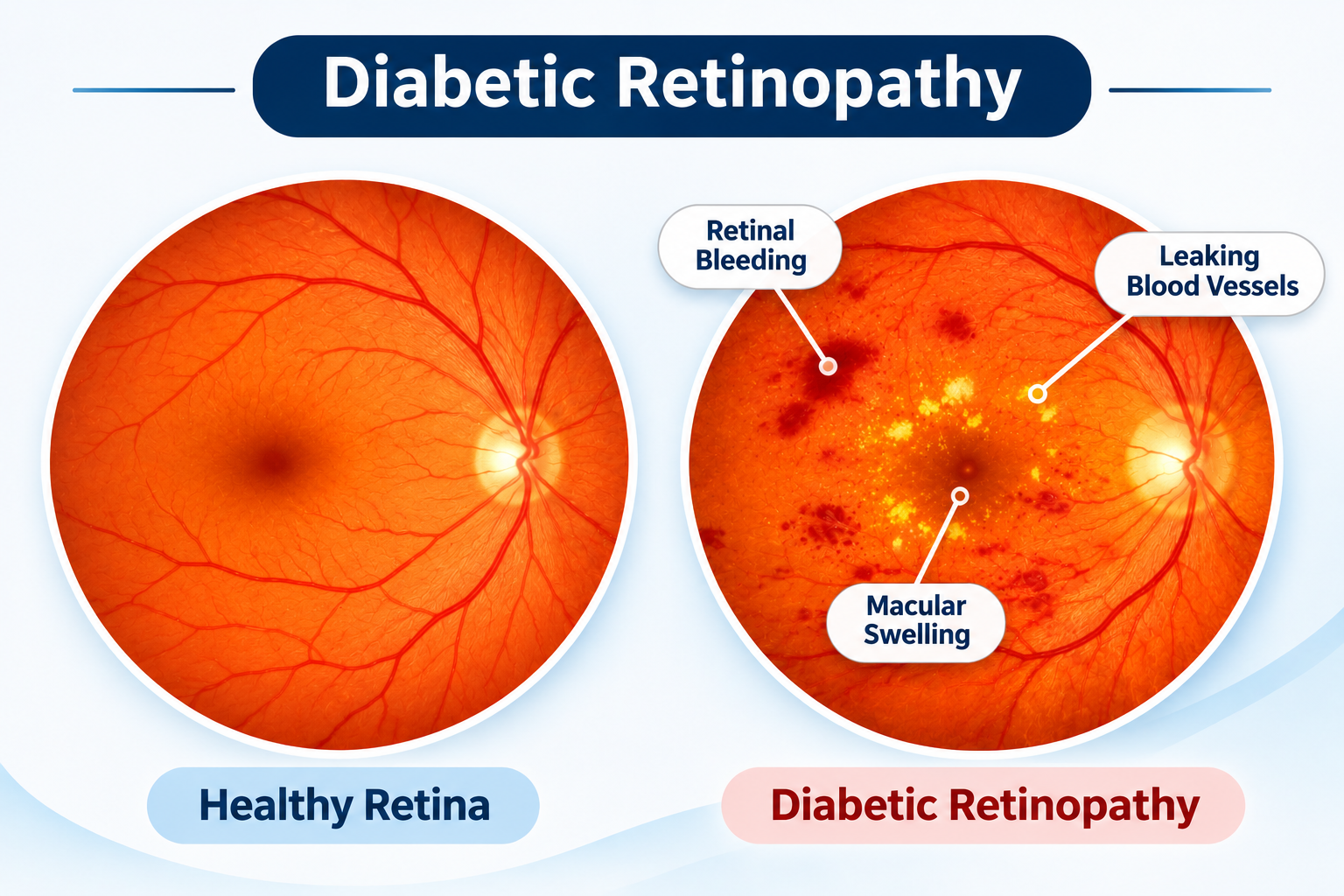
One of the main reasons diabetic eye examinations are important is that retinal damage can develop without affecting vision in the early stages.
A person may read, drive, and carry out everyday activities normally while changes are already developing in the retinal blood vessels.
A comprehensive examination can help identify these changes before noticeable vision problems occur. This allows the ophthalmologist to assess the retina, monitor any progression, and recommend appropriate care when necessary.
Clear vision does not always mean a healthy retina. People with diabetes should follow their recommended screening schedule even when they have no eye-related symptoms.
Diabetic eye screening is designed to examine the retina and identify possible signs of diabetes-related damage.
Depending on the patient’s needs, the examination may include:
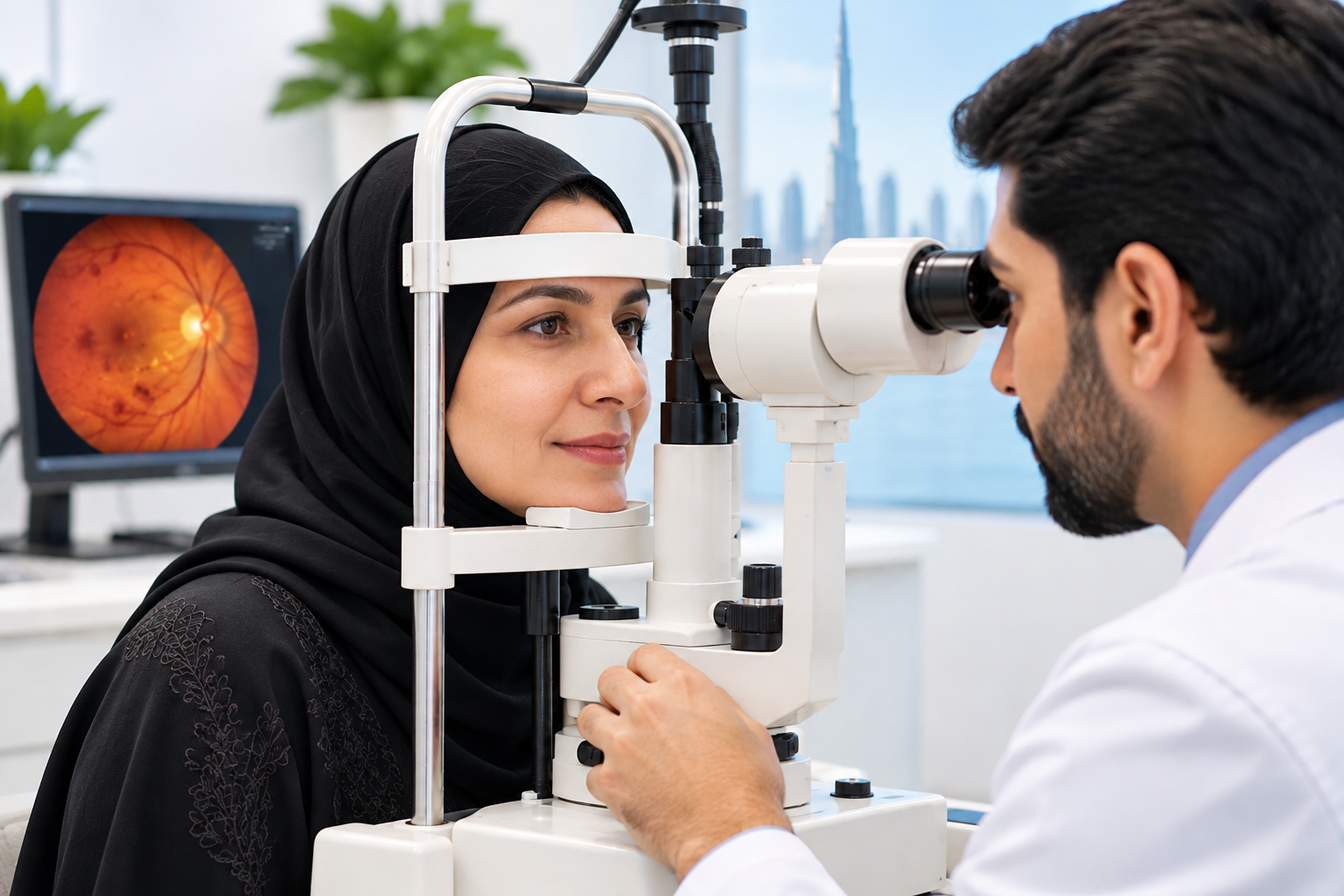
Dilated Retinal Examination
Special eye drops widen the pupils, allowing the ophthalmologist to examine the retina and its blood vessels for signs of damage.
Retinal Photography
A specialized camera captures images of the back of the eye. These images help document retinal changes and can be compared during follow-up examinations.
Optical Coherence Tomography (OCT)
OCT is a non-invasive imaging test that provides detailed images of the retina. It helps detect swelling or fluid accumulation in the macula.
Not every patient needs all these tests. The ophthalmologist determines which examinations are appropriate based on the patient’s condition.
A little preparation can help make your appointment more useful. Before your examination:
If dilating drops are used, your vision may remain blurry, and your eyes may be sensitive to light for a few hours. It is helpful to arrange transport if you are uncomfortable driving after the examination.
Normal vision does not rule out early retinal damage. Some people with consistently normal retinal examinations and well-managed blood glucose may be eligible for screening every one to two years. However, this decision should be made with their eye care professionals.
Yes. Retinal changes can develop between scheduled examinations. This is why people with existing retinopathy or higher individual risk may need more frequent monitoring.
Yes. Good blood glucose control can reduce the risk of developing or worsening diabetic retinopathy, but it does not eliminate the risk. Regular examinations remain important.
Not always. A routine vision test mainly checks how clearly, you can see. A diabetic eye examination specifically assesses the retina and its blood vessels, often using pupil dilation and retinal imaging when appropriate.
The timing depends on your diabetes type, previous retinal findings, and individual risk factors. People with type 2 diabetes generally need an examination at diagnosis, while people with type 1 diabetes generally need one within five years of diagnosis. Your ophthalmologist can recommend the appropriate follow-up interval after examining your retina.
Table of Contents
ToggleGet in touch with us today for expert eye care and personalized solutions. We’re here to help!
We’re here to provide reliable healthcare information and services. Let’s build a healthier future together.