Cataract Surgery for Clearer, Brighter Vision.
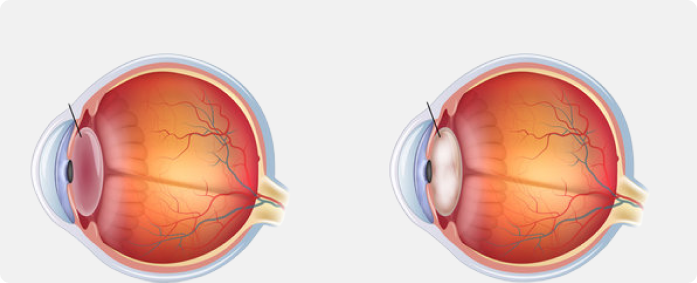
A cataract is a condition in which the eye’s natural lens becomes cloudy, reducing the amount of light reaching the retina and causing vision to become blurred, hazy, or less distinct. As the lens loses its transparency, visual clarity gradually decreases. In advanced cases, cataracts can cause significant visual impairment and make everyday activities such as reading, driving, and recognizing faces more difficult.
Age-related cataracts are the most common type, although cataracts may also develop due to diabetes, prolonged steroid use, eye injury, previous eye surgery, radiation exposure, or certain inherited conditions. Symptoms usually develop gradually and may worsen over time.
While glasses may help improve vision in the early stages, they cannot remove a cataract. When visual symptoms begin to affect daily activities, cataract surgery may be recommended. The procedure removes the cloudy natural lens and replaces it with a clear artificial intraocular lens (IOL), one of the safest and most successful surgical procedures in medicine.
Common symptoms of cataracts include:
Cataract symptoms usually develop gradually and often worsen as the lens becomes increasingly cloudy.
A cataract is diagnosed through a comprehensive eye examination. The examination helps assess the severity of the cataract and identify any other eye conditions that may affect vision or treatment planning.
Vision Assessment
Vision is measured to determine how much the cataract is affecting sight and daily visual function.
Slit-Lamp Examination
A slit-lamp microscope is used to examine the natural lens and assess the location, type, and density of the cataract.
Dilated Retinal Examination
Eye drops may be used to enlarge the pupil, allowing a detailed examination of the retina and optic nerve.
Biometry
If surgery is being considered, measurements of the eye are performed to calculate the appropriate intraocular lens (IOL) power.
Treatment depends on the severity of the cataract and the extent to which it affects vision and daily activities. While certain measures may help improve visual comfort in the early stages, cataract surgery remains the only treatment that removes the cloudy lens.
Non-Surgical Measures
In the early stages, some individuals may benefit from an updated glasses prescription, brighter lighting, anti-glare lenses, or magnifying aids for reading. These measures may help improve visual comfort but do not stop cataract progression or remove the cataract.
Cataract Surgery
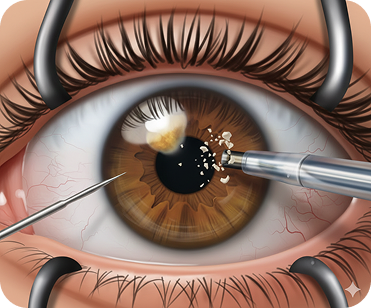
Cataract surgery is usually recommended when visual symptoms begin to affect daily activities. During the procedure, the cloudy natural lens is removed and replaced with a clear artificial intraocular lens (IOL).
The procedure typically takes around 15–20 minutes per eye and is usually performed using numbing eye drops. A small incision is made to remove the cloudy lens and implant the intraocular lens, and stitches are not required in most cases. Patients usually go home on the same day. Vision often begins to improve within a few days, although complete visual recovery may take several weeks. Prescribed eye drops should be used as directed, and rubbing or putting pressure on the eye should be avoided during the recovery period.
An intraocular lens (IOL) is an artificial lens implanted after the cataract has been removed. Several types of intraocular lenses are available, and the most suitable option depends on individual visual requirements, eye measurements, and lifestyle needs.
Types of Intraocular Lenses
Monofocal IOL
Monofocal lenses provide clear vision at a single distance, usually for distance vision. Glasses may still be required for reading or other near tasks.
Multifocal IOL
Multifocal lenses are designed to provide vision at multiple distances and may reduce dependence on glasses for certain daily activities.
Extended Depth of Focus (EDOF) IOL
EDOF lenses provide a broader range of focus, particularly for distance and intermediate vision.
Toric IOL
Toric lenses are designed for individuals with astigmatism and help correct both the cataract and corneal astigmatism.
No. Although age is the most common cause, cataracts can also occur due to trauma, medications, medical conditions like diabetes, or even be present from birth.
Yes. Cataract surgery is one of the safest and most successful procedures worldwide, with a high success rate and quick recovery for most patients.
The cataract itself does not return. However, some patients may develop cloudiness of the lens capsule later on. This is known as Posterior Capsular Opacification (PCO) or “secondary cataract.” It can be easily treated with a quick and painless laser procedure called YAG capsulotomy.
Trusted Eye Care Since 2021
Expert Staff
Satisfied Patients
Aloka Eye Clinic, we believe your eyes deserve nothing less than exceptional care. Since 2021, our team of highly qualified ophthalmologists in Dubai and eye care specialists has been dedicated to providing accurate diagnosis, advanced treatments, and compassionate service. We combine state-of-the-art technology with years of expertise to ensure every patient receives personalized solutions for clearer, healthier vision.
What sets us apart is our commitment to patient comfort, trust, and long-term eye health, making it easier to find an eye specialist near you in Dubai. From routine eye check-ups to complex surgical procedures, every step of your journey is guided by precision, transparency, and genuine care. Our mission is to help you see life more clearly — through innovation, expertise, and a passion for excellence that has made Aloka Eye Clinic a trusted name in eye care for over a decade.
From routine eye check-ups to complex surgical procedures, every step of your journey is guided by precision, transparency, and genuine care. Our mission is to help you see life more clearly — through innovation, expertise, and a passion for excellence
Our patients’ experiences speak volumes. Read their stories to discover how our expert care, personalized treatments, and dedication have transformed their vision and enhanced their quality of life.


Clear Vision, Covered with Care.
To make quality eye care more accessible and stress-free, Aloka Eye Clinic proudly partners with a wide network of leading insurance companies in Dubai. We accept coverage from major local and international insurers, ensuring our patients can receive expert care without financial worry. Our dedicated team is always available to assist you with insurance queries, approvals, and claims, making your experience seamless from consultation to treatment. At Aloka, your vision and peace of mind are our top priorities.
Get in touch with us today for expert eye care and personalized solutions. We’re here to help!
We’re here to provide reliable healthcare information and services. Let’s build a healthier future together.