 Gunjan Kumari
|
August 25, 2026
|
5 Min Read
Gunjan Kumari
|
August 25, 2026
|
5 Min Read
Your eyes play an essential role in daily life, making it important to pay attention to any unusual changes in vision or comfort. Certain eye symptoms may appear suddenly, while others develop gradually over time. Recognizing these warning signs early can help identify underlying eye conditions before they affect vision permanently.
Prompt evaluation by an ophthalmologist is often the key to protecting long-term eye health and ensuring that appropriate treatment begins at the right time.
Changes in vision, eye discomfort, or visual disturbances are often the first signs that something is affecting the health of the eye. Conditions involving the cornea, retina, optic nerve, or other internal structures of the eye can sometimes progress quickly and may require timely medical attention.
Understanding which symptoms deserve prompt evaluation can help prevent complications and support better visual outcomes.
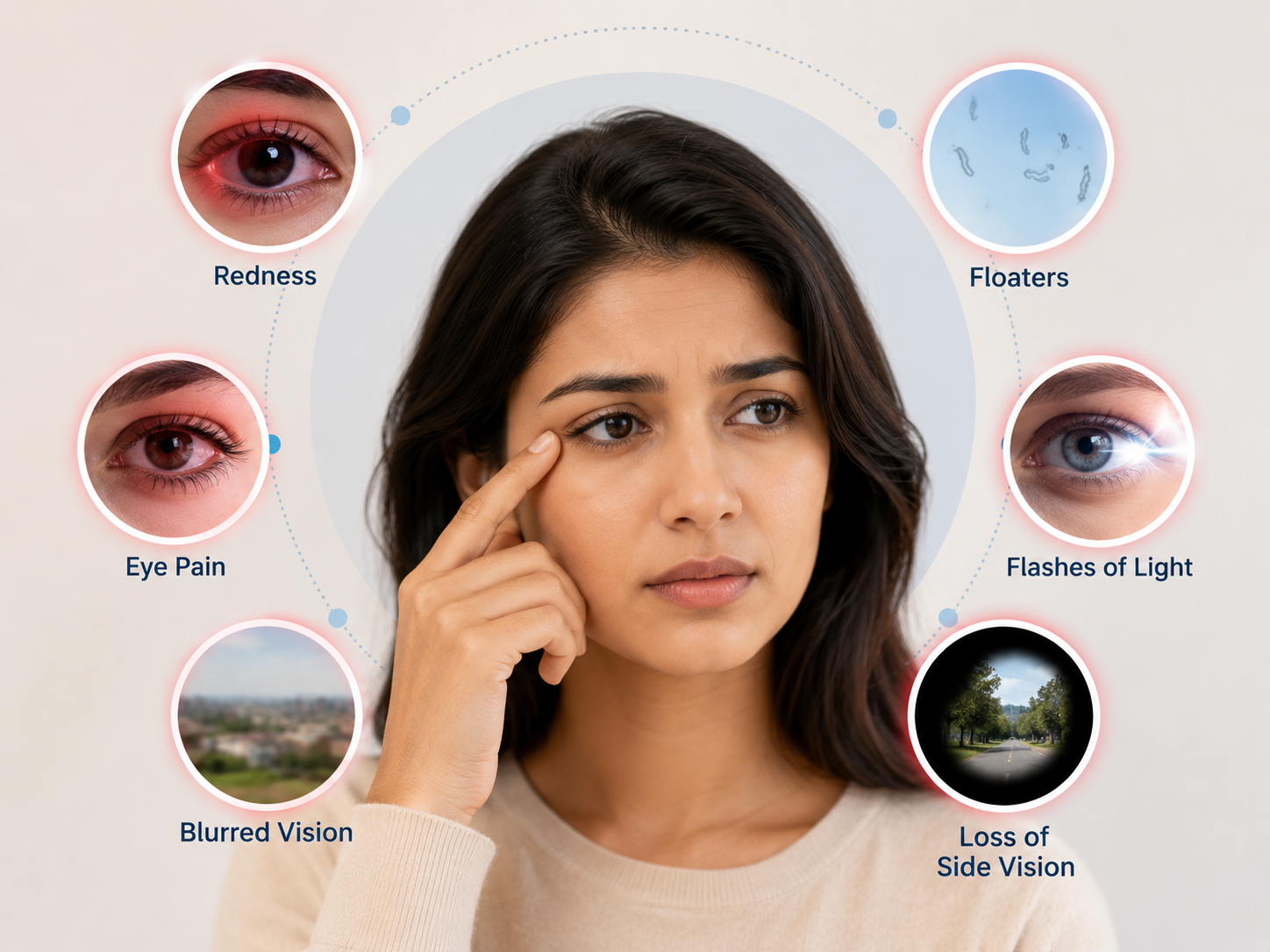
Sudden Blurred Vision
Clear vision depends on several parts of the eye working together properly. A sudden change in visual clarity may indicate a problem affecting the cornea, retina, optic nerve, or lens.
Warning signs include:
Any sudden change in vision should be assessed by an eye specialist.
Flashes of Light and New Floaters
Floaters often appear as small spots, lines, or cobweb-like shapes drifting across your vision. While occasional floaters can be normal, a sudden increase in their number deserves attention.
Seek prompt evaluation if you notice:
These symptoms may indicate a retinal condition that requires urgent care.
Eye Pain
Persistent or significant eye pain is never a symptom to ignore. Pain may be associated with infection, inflammation, corneal injury, or increased pressure within the eye.
Eye pain becomes particularly concerning when accompanied by:
Professional evaluation can help determine the cause and prevent complications.
Persistent Eye Redness
Red eyes are commonly associated with allergies, irritation, or environmental factors. Redness that continues for several days or occurs alongside other symptoms may indicate an underlying eye condition.
Redness deserves medical attention when it occurs with:
Loss of Side Vision
Peripheral vision allows you to see objects outside your direct line of sight. Changes in side vision may develop gradually and can easily go unnoticed during daily activities.
A reduction in peripheral vision can affect:
Regular eye examinations help detect conditions that may affect peripheral vision before significant vision loss occurs.
Early diagnosis provides the best opportunity to protect vision and manage eye conditions effectively. Symptoms that seem minor initially can sometimes indicate more serious underlying problems.
Scheduling an eye examination when new symptoms develop allows your ophthalmologist to identify the cause and recommend appropriate treatment before complications arise.
Flashes of light can occur for several reasons. A sudden onset of flashes, particularly when accompanied by new floaters or a shadow in your vision, should be evaluated promptly as it may indicate a retinal problem.
Yes. Eye pain can result from several conditions, including corneal injuries, inflammation, dry eye disease, increased eye pressure, or other eye disorders. A professional examination is often needed to determine the cause.
Persistent redness is not considered normal. While temporary redness may occur due to irritation or allergies, ongoing redness may indicate infection, inflammation, or another condition requiring treatment.
Yes. Several eye diseases can progress quietly before vision changes become obvious. Regular comprehensive eye examinations play an important role in early detection and treatment.
Seek medical attention if you experience sudden blurred vision, flashes of light, a sudden increase in floaters, severe eye pain, persistent redness with vision changes, a shadow across your vision, or sudden vision loss. Early evaluation can help protect your eyesight and reduce the risk of long-term complications.
Table of Contents
ToggleGet in touch with us today for expert eye care and personalized solutions. We’re here to help!
We’re here to provide reliable healthcare information and services. Let’s build a healthier future together.