 Gunjan Kumari
|
November 3, 2026
|
6 Min Read
November is Diabetes Awareness Month, so it is the right time to understand how diabetes affects vision. In its early stages, diabetic eye disease usually causes no pain and no change in sight. This guide from Aloka Eye Clinic and Day Surgery Center in Dubai explains what diabetes does to your eyes, which warning signs to watch for, and how regular screening protects your sight.
Diabetic eye disease is a group of eye conditions that can affect people with type 1, type 2, or gestational diabetes. The main ones are:
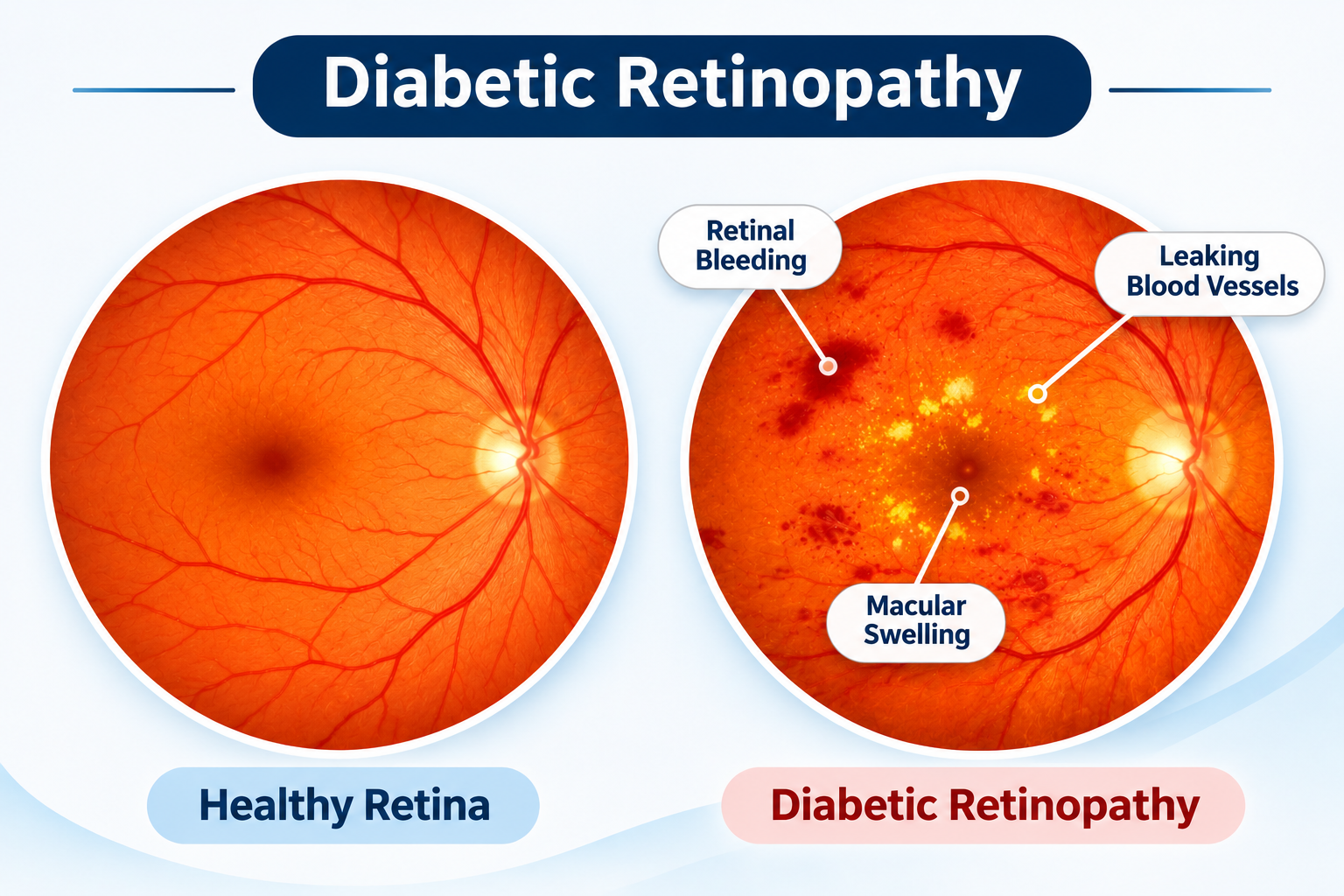
Over time, high blood sugar weakens the tiny blood vessels in the retina. They may leak fluid or blood or become blocked. In advanced stages the retina grows fragile new vessels (proliferative diabetic retinopathy) that can bleed, form scar tissue, and lead to retinal detachment or severe vision loss.
The retina has no pain receptors, and early damage often sits away from the center of vision. The brain also compensates for small defects. As a result, you can have diabetic retinopathy and still see 6/6 on a chart. By the time vision visibly changes, the disease may already be advanced. That is why screening matters more than waiting for symptoms.
See an eye doctor if you notice:
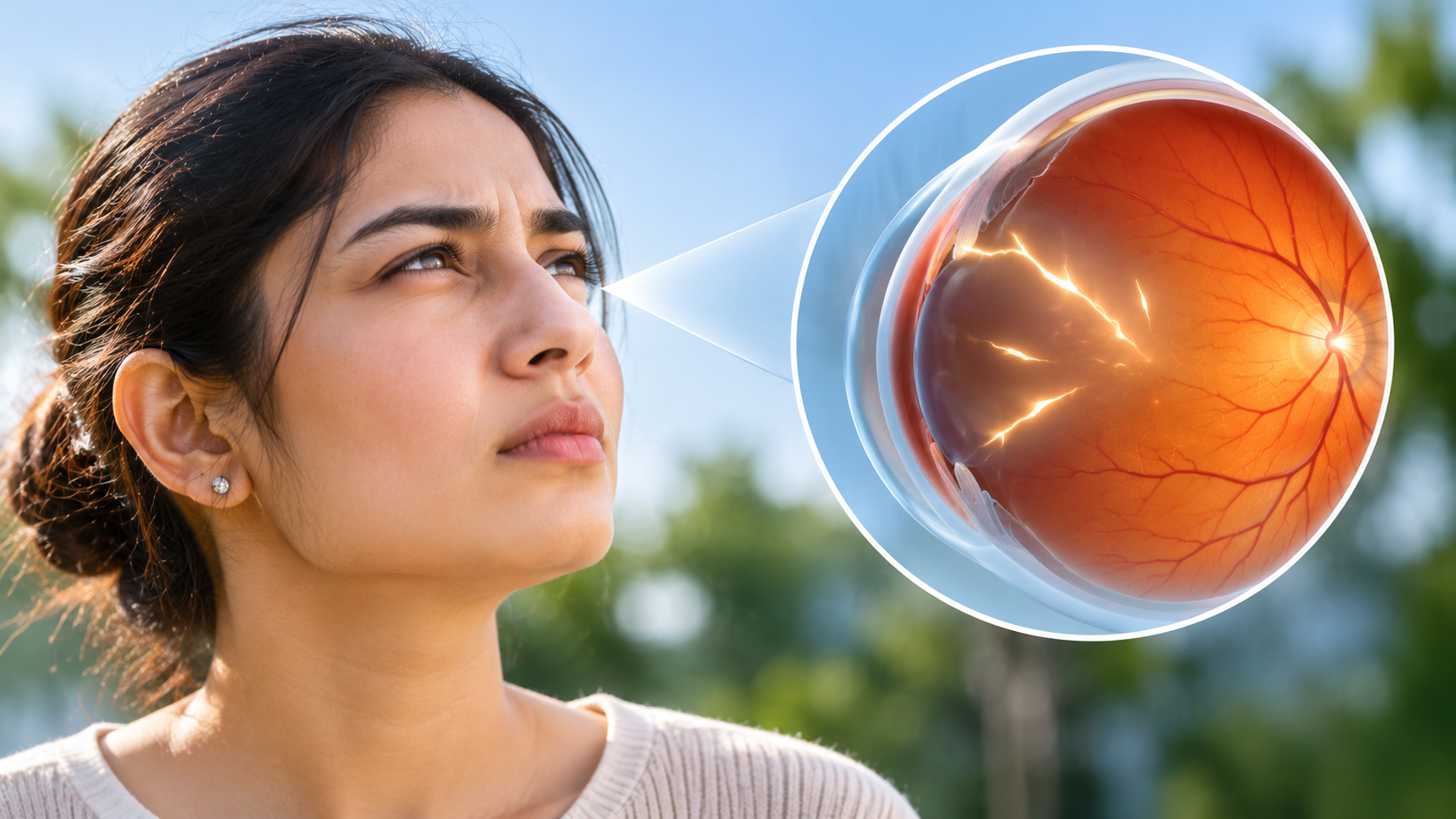
Seek urgent care for sudden vision loss, a sudden shower of floaters, flashes of light, or a dark curtain across your vision. These can signal bleeding or retinal detachment.
Your risk of eye complications rises with:
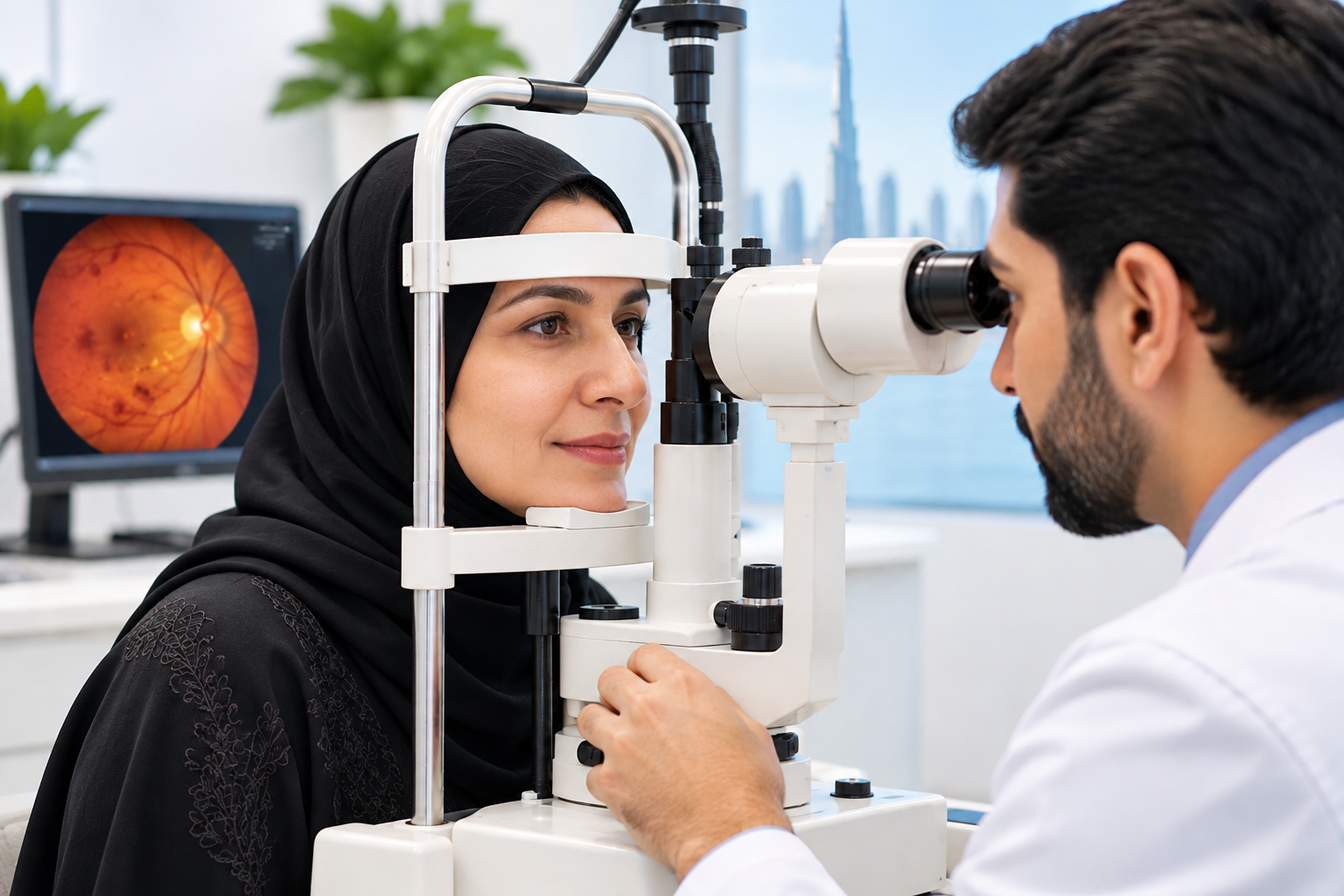
A comprehensive diabetic eye exam typically includes a visual acuity test, eye pressure measurement, and a dilated retinal examination. Your doctor may add retinal photography or optical coherence tomography (OCT), a scan that shows swelling in the macula. Fluorescein angiography may be used in selected cases to look at blood flow in the retina.
Most eye and diabetes experts recommend the following schedule:
If retinopathy is found, you may need more frequent visits.
Early detection allows treatment before major vision is lost. Depending on the stage, options include:
Treatment generally aims to preserve existing vision and slow progression. Vision already lost to retinal damage can’t always be restored, which is why early action is so important.
Yes, but most diabetes-related vision loss is preventable. Regular screening, good control of blood sugar and blood pressure, and timely treatment greatly reduce the risk of serious vision loss.
Yes. Early diabetic retinopathy commonly has no symptoms, and vision can stay normal while damage develops. Only a dilated eye exam or retinal imaging can detect it.
Early changes may stabilize or improve when blood sugar and other risk factors are well controlled. Established damage to the retina often cannot be reversed, but treatment can stop or slow further loss.
Most people with diabetes need a dilated eye exam at least once a year. People with type 2 diabetes should have a first exam at diagnosis. Your eye doctor may recommend more frequent visits if retinopathy is found.
See an ophthalmologist when you are first diagnosed with diabetes, then at least once a year. Book sooner if you notice blurred vision, floaters, dark areas, double vision, or poor night vision. Seek emergency care for sudden vision loss, flashes of light, or a curtain-like shadow. If you are planning or have begun a pregnancy with diabetes, schedule an exam as well.
Table of Contents
ToggleGet in touch with us today for expert eye care and personalized solutions. We’re here to help!
We’re here to provide reliable healthcare information and services. Let’s build a healthier future together.