 Gunjan Kumari
|
October 15, 2026
|
4 Min Read
Dubai’s hot weather, dusty conditions, strong sunlight, and widespread use of air conditioning can affect eye comfort. These environmental factors may contribute to dry eyes, redness, irritation, and watering. Understanding how the local climate affects your eyes can help you take practical steps to protect them and recognize when you need professional eye care.
Hot weather and low humidity can cause tears to evaporate faster, leaving the surface of the eyes dry. Common symptoms include burning, stinging, redness, a gritty sensation, and temporary blurred vision. People with existing dry eye diseases may experience greater discomfort in these conditions.
Air conditioning helps keep indoor spaces comfortable, but prolonged exposure to dry air and direct airflow can worsen eye dryness. This is particularly noticeable in offices, homes, and other enclosed spaces where air conditioning runs for extended periods.
Avoid directing air vents towards your face, take regular breaks from screens, and blink frequently to help maintain eye comfort.
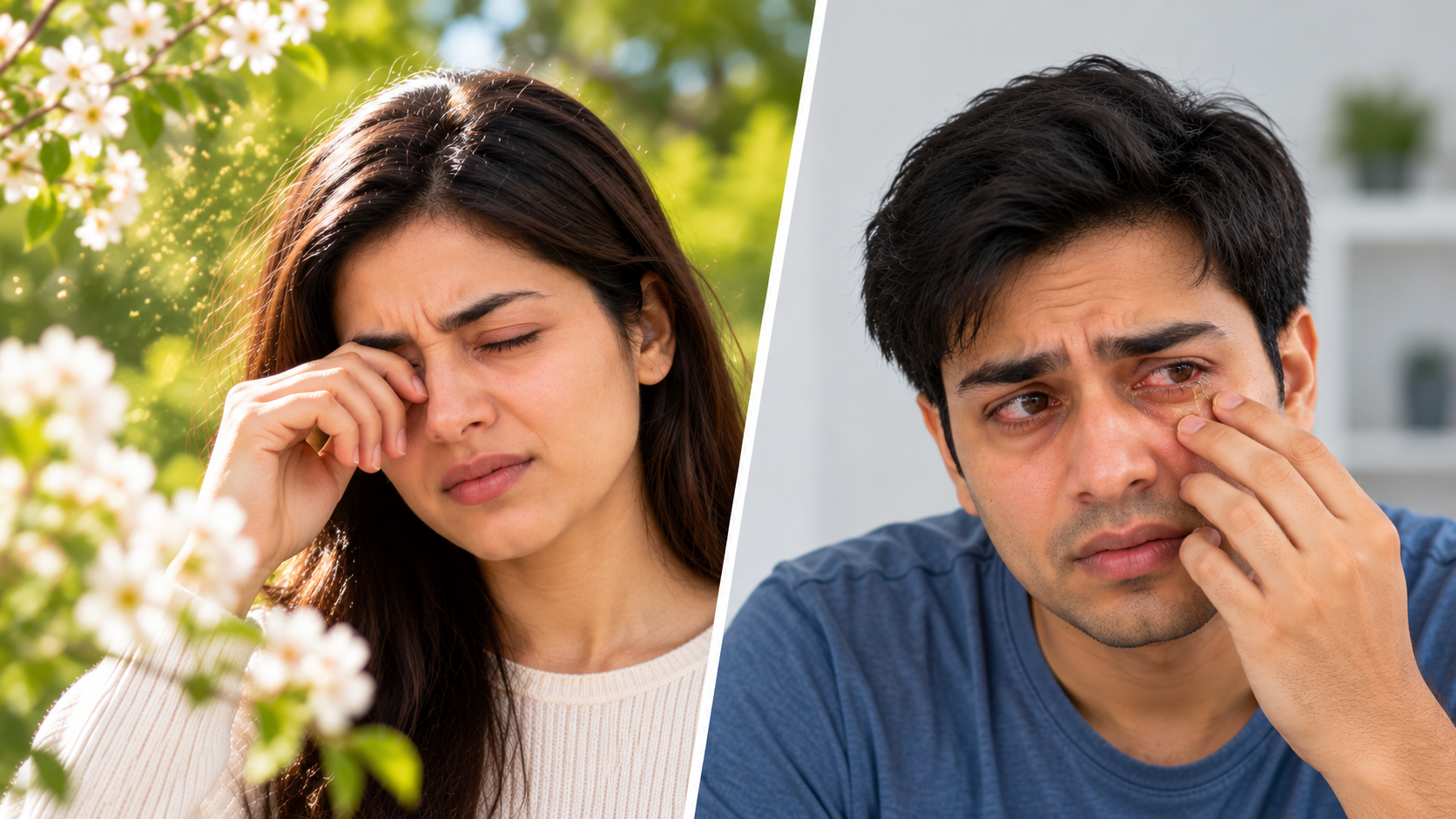
Dust and airborne particles can irritate the surface of the eyes, causing redness, itching, watering, and discomfort. Wind can also increase tear evaporation, making these symptoms worse.
Avoid rubbing your eyes when they feel irritated. Wear protective eyewear during dusty outdoor activities, and seek medical advice if irritation persists.
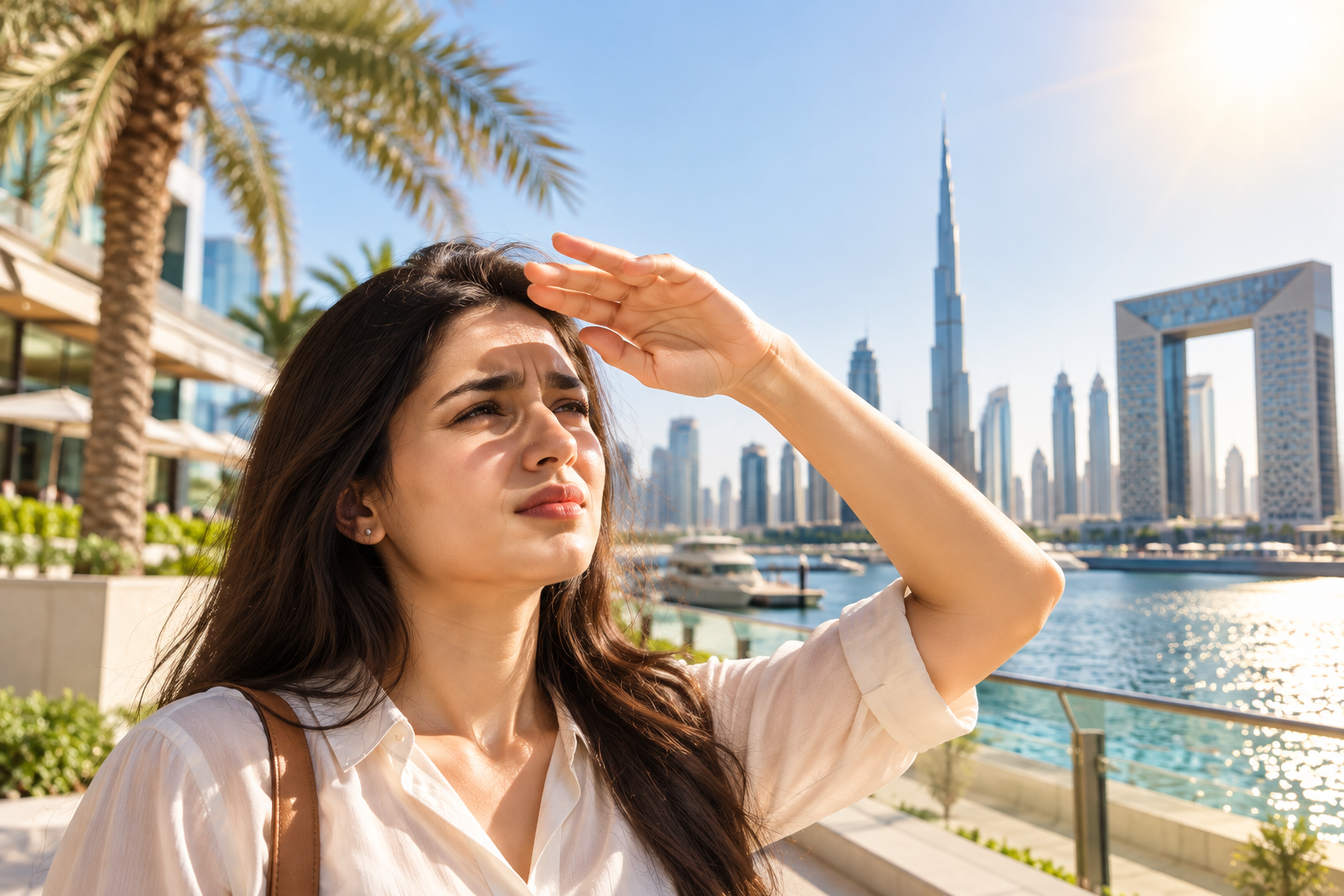
Dubai experiences abundant sunshine throughout the year. Prolonged exposure to ultraviolet (UV) radiation can increase the risk of certain eye conditions, including cataracts and pterygium, a growth on the surface of the eye.
Wear sunglasses that provide 100% UVA and UVB protection or UV400 protection outdoors. A wide-brimmed hat can provide additional protection from direct sunlight.
A few simple habits can help reduce climate-related eye discomfort:
Occasional irritation may improve when you reduce exposure to dust, wind, or direct air conditioning. However, persistent dryness, redness, excessive watering, light sensitivity, or blurred vision should be assessed by an ophthalmologist.
Sudden vision loss, severe eye pain, or a sudden increase in flashes or floaters requires urgent medical attention. These symptoms should never be dismissed as an effect of the weather.
Yes. Hot weather, low humidity, dust, and air conditioning can worsen tear evaporation and contribute to dry eye symptoms.
Dry indoor air and direct airflow can cause tears to evaporate more quickly, leading to burning, irritation and dryness.
Yes. Dust can irritate the eye’s surface and cause redness, watering, itching, or a gritty sensation. Persistent symptoms should be evaluated by an eye specialist.
Yes. UV exposure remains relevant throughout the year. Choose sunglasses with 100% UVA and UVB protection or UV400 protection outdoors.
Consult an ophthalmologist if dryness, redness, irritation or watering persists or keeps returning. Seek urgent medical attention for sudden vision changes or severe eye pain.
Table of Contents
ToggleGet in touch with us today for expert eye care and personalized solutions. We’re here to help!
We’re here to provide reliable healthcare information and services. Let’s build a healthier future together.