 Gunjan Kumari
|
September 24, 2026
|
5 Min Read
A child’s vision plays an important role in learning, development, and everyday activities. Clear eyesight helps children read, participate in school, play sports, and explore the world around them with confidence. However, children may not always recognize or communicate that they are having difficulty seeing.
Because many childhood eye conditions develop gradually, parents are often the first to notice subtle changes. Recognizing the early signs of vision problems can help ensure timely diagnosis and appropriate treatment.
Good vision is essential for a child’s overall development. Vision problems can affect academic performance, concentration, coordination, and social interactions.
Early detection is particularly important because some eye conditions respond best to treatment during childhood, when the visual system is still developing.
Frequent Eye Rubbing
Occasional eye rubbing is normal, especially when a child is tired. Persistent rubbing, however, may indicate eye strain, allergies, or an underlying vision problem.
Squinting
Children often squint when trying to focus on distant objects. Frequent squinting may be a sign of refractive errors such as nearsightedness, farsightedness, or astigmatism.
Sitting Too Close to Screens
A child who consistently sits very close to the television, tablet, or computer screen may be struggling to see clearly from a normal distance.
Complaints of Headaches
Repeated headaches, particularly after reading or schoolwork, can sometimes be associated with uncorrected vision problems.
Difficulty Reading or Maintaining Attention
Vision issues can make reading more challenging and may affect concentration during learning activities.
Covering One Eye
A child who frequently covers or closes one eye while reading or looking at objects may be experiencing double vision or difficulty focusing.
Misaligned Eyes
Eyes that appear to turn inward, outward, upward, or downward should be evaluated by an eye specialist. Early treatment can be important for proper visual development.
Excessive Tearing or Light Sensitivity
Persistent tearing, unusual sensitivity to light, or frequent blinking may indicate an underlying eye condition that requires assessment.
Several eye conditions can affect children, including:
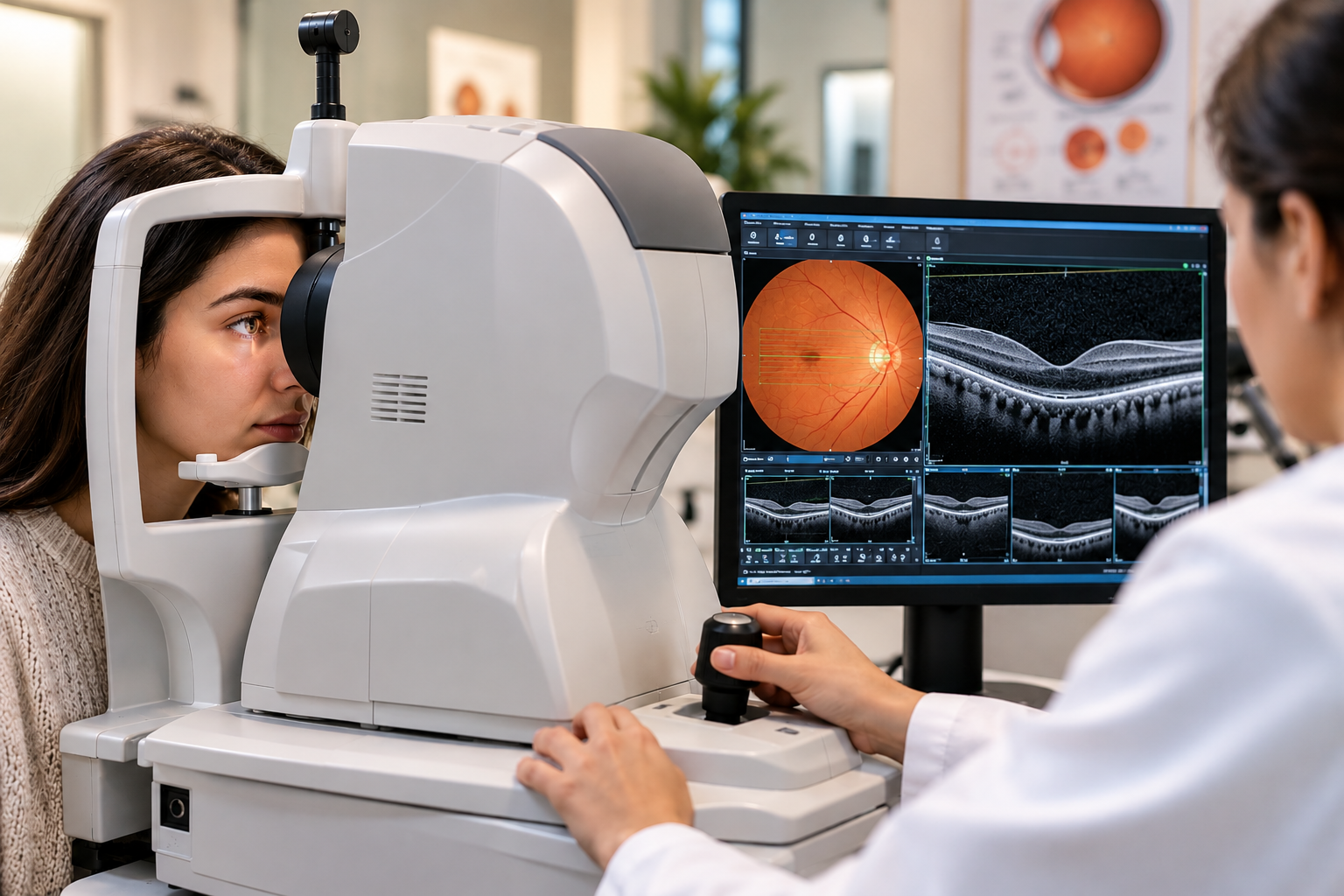
Regular eye examinations can help detect these conditions before they affect a child’s vision and development.
Children do not always realize their vision is different from normal because they have no basis for comparison. A comprehensive eye examination can identify problems that may not be obvious during everyday activities.
Routine eye assessments help monitor visual development and ensure that any concerns are addressed early.
Simple habits can help support children’s eye health:
Yes. Certain eye conditions may develop without noticeable symptoms, which is why regular eye examinations are important.
Vision screening often begins during infancy and early childhood. The timing of comprehensive eye examinations may vary based on a child’s individual needs and risk factors.
Extended screen use can contribute to eye strain and dry eye symptoms. Regular breaks and healthy screen habits can help reduce discomfort.
A lazy eye, or amblyopia, occurs when vision does not develop normally in one eye. Early diagnosis and treatment can improve outcomes.
Parents should arrange an eye examination if a child frequently squints, rubs their eyes, complains of headaches, sits unusually close to screens, has misaligned eyes, or shows any signs of vision difficulties. Early evaluation can help support healthy visual development and learning.
Table of Contents
ToggleGet in touch with us today for expert eye care and personalized solutions. We’re here to help!
We’re here to provide reliable healthcare information and services. Let’s build a healthier future together.