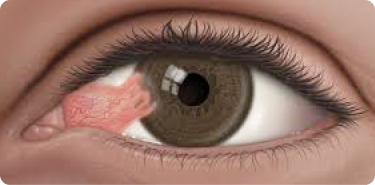
Corneal Cross-Linking (CXL) is the only treatment proven to slow or stop the progression of keratoconus by strengthening the cornea. While it does not cure the condition or restore normal vision, it helps preserve your eyesight and may reduce the need for a corneal transplant in the future.
At Aloka Eye Clinic & Day Surgery Center, Dubai, our cornea specialists use advanced imaging to diagnose keratoconus early and recommend the most appropriate treatment for each patient.
What Is Corneal Cross-Linking?
Corneal Cross-Linking is a minimally invasive procedure that strengthens the cornea using riboflavin (vitamin B2) eye drops and ultraviolet-A (UVA) light.
The treatment creates additional bonds between the collagen fibres in the cornea, making it stronger and more stable. This helps prevent the cornea from becoming thinner or bulging further.
The goal of cross-linking is to stop keratoconus from progressing – not to reverse existing corneal changes.
Who Should Consider Corneal Cross-Linking?
Your ophthalmologist may recommend CXL if:
- Corneal scans show your keratoconus is progressing.
- Your glasses or contact lens prescription changes frequently.
- Your vision continues to worsen due to keratoconus.
- You have been diagnosed at a young age, when the condition is more likely to progress.
Early treatment often provides the best long-term outcomes.
How Do You Know If Keratoconus Is Getting Worse?
Keratoconus doesn’t always cause noticeable symptoms in its early stages. Regular eye examinations are important to detect progression.
Signs that may indicate worsening keratoconus include:
- Increasingly blurred or distorted vision.
- Frequent changes in your glasses prescription.
- Difficulty seeing clearly at night.
- Increased glare or halos around lights.
- Reduced vision that cannot be fully corrected with glasses.
Your ophthalmologist may use corneal topography or tomography to compare scans over time and determine whether the condition is progressing.
What Happens During the Procedure?
Corneal Cross-Linking is usually performed as a day-care procedure and takes about 30 to 60 minutes.
During the procedure:
- Anaesthetic eye drops are used to numb the eye.
- Riboflavin (vitamin B2) drops are applied to the cornea.
- Controlled UVA light activates the riboflavin to strengthen the corneal collagen.
- A protective contact lens may be placed while the eye heals.
Most patients return home the same day.
Recovery After Corneal Cross-Linking
It is normal to experience mild discomfort, watering, or light sensitivity for the first few days after treatment.
During recovery:
- Use all prescribed eye drops as directed.
- Attend scheduled follow-up appointments.
- Wear sunglasses outdoors if your eyes are sensitive to light.
Vision may fluctuate during healing and usually stabilises over the following weeks to months.
Why Early Treatment Matters?
Keratoconus can gradually weaken the cornea, making vision increasingly difficult to correct with glasses or contact lenses.
Treating the condition early with Corneal Cross-Linking helps preserve corneal strength, reduce the risk of further progression, and improve the chances of maintaining good vision over the long term.
Frequently Asked Questions